


Onychomycosis is a fungal disease that affects the nail plates.This infection can appear on any nail, but is most commonly affected on the first toes.If the disease is not treated, the infection will spread further, affecting the remaining nails.If nail fungus is detected in the big toe, treatment will be long-term, but the treatment must be completed to the end to reduce the risk of recurrence.
In its early stages, nail fungus is considered by many people to be a cosmetic problem.The disease does not cause discomfort, but the appearance of the affected nail will change.
But if the disease is not treated, it will progress seriously and physical discomfort will lead to cosmetic problems.Let's learn what symptoms suggest nail fungus and how to treat it.
Why does the disease develop?
Nail fungus is an infectious disease caused by pathogenic microorganisms - fungi.You can get an infection if you try on someone else's shoes or walk barefoot on the floor in a swimming pool or sauna.
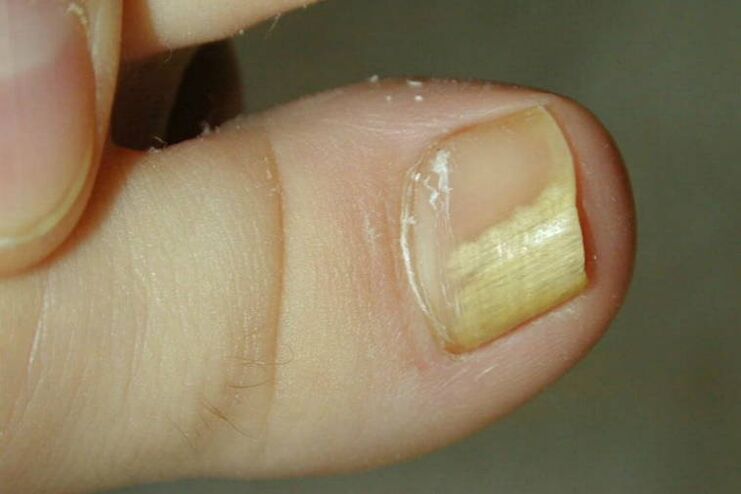
The fact is that the pathogens that cause onychomycosis multiply rapidly in warm, humid environments.Therefore, bathrooms and swimming pools are the easiest places to "catch" mushrooms.
Advice!Another place where you are very susceptible to infection is a nail and pedicure salon, if the staff is negligent in sterilizing tools and equipment.
The fungus enters the body especially easily if there is damage to the skin - abrasions, abrasions.For this reason, infections most often affect the big toe, since this place on the foot is often damaged by wearing shoes that are too tight.
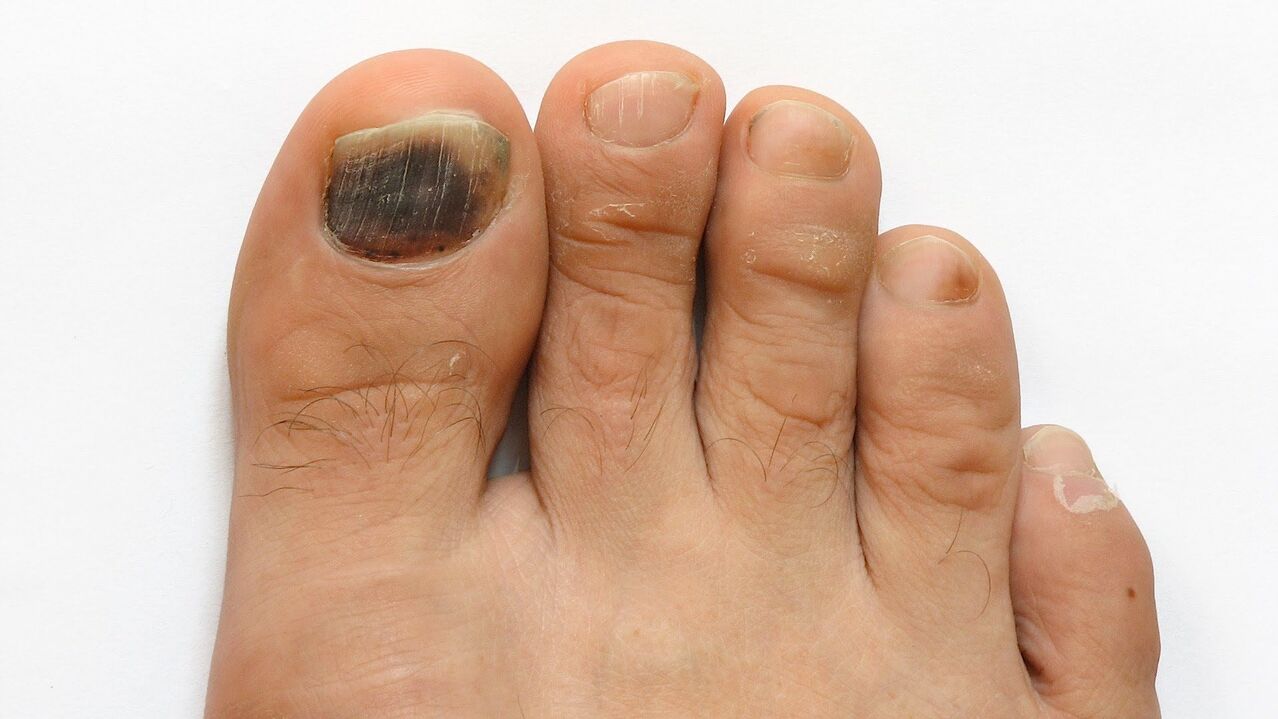
Factors that contribute to the development of the disease
Everyone can encounter pathogenic microflora, but not all develop disease.The spread of pathogens is fought by the body's immune system.But when the immune system weakens, the disease begins to progress.The following factors contribute to the development of the disease:
- Hormonal imbalance and diseases of the hormonal system;
- primary or secondary immunodeficiency;
- wounds in the nail and surrounding skin;
- peripheral circulatory disorders;
- various dermatological diseases - dermatitis, psoriasis, etc.;
- chronic diseases caused by the immune system not working at full capacity;
- flat feet;
- The result is increased sweating and diaper rash.
Advice!Not only diseases but also certain habits contribute to the development of fungal infections.For example, wearing shoes that are too tight, choosing socks and shoes made from artificial materials, which are not hygienic.
According to medical statistics, the risk group for developing onychomycosis in the big toe includes:
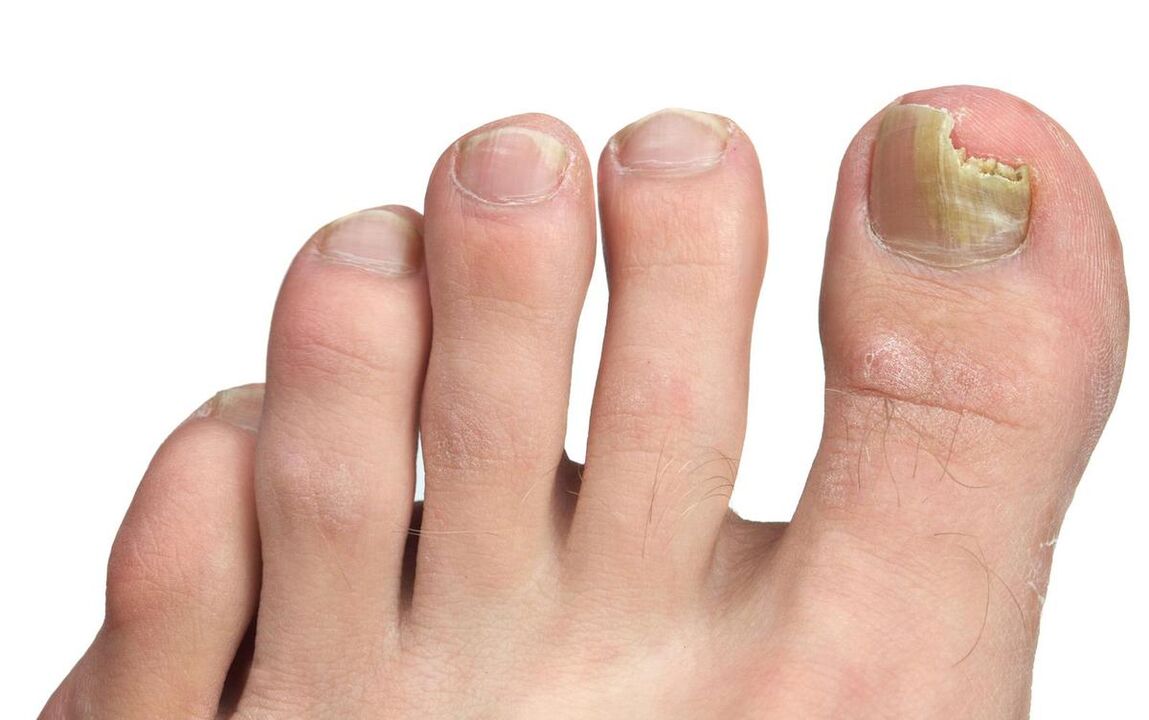
- older people;
- visitors to public gyms, swimming pools, bathhouses;
- beautician;
- healthcare staff;
- People who sweat too much.
Token
The effectiveness of treating big toenail fungus largely depends on the stage of the disease.If you start taking appropriate measures as soon as the first symptoms appear, then coping with this disease will be relatively easy.If the process is started, treatment will require patience and time.The course can last more than six months.
The special thing about this disease is that in the early stages the symptoms are very difficult to detect.Indeed, very few people will be wary when they see a small spot on the first toenail.Many people simply do not notice such changes or even notice but do not pay attention to such symptoms, because physical discomfort does not appear at this stage.
But without treatment, this process will grow and progress.A small spot will begin to grow, completely changing the appearance of the sheet.The infection can affect the skin near the nail and can also spread to other fingers.You may suspect fungus if the following symptoms appear;
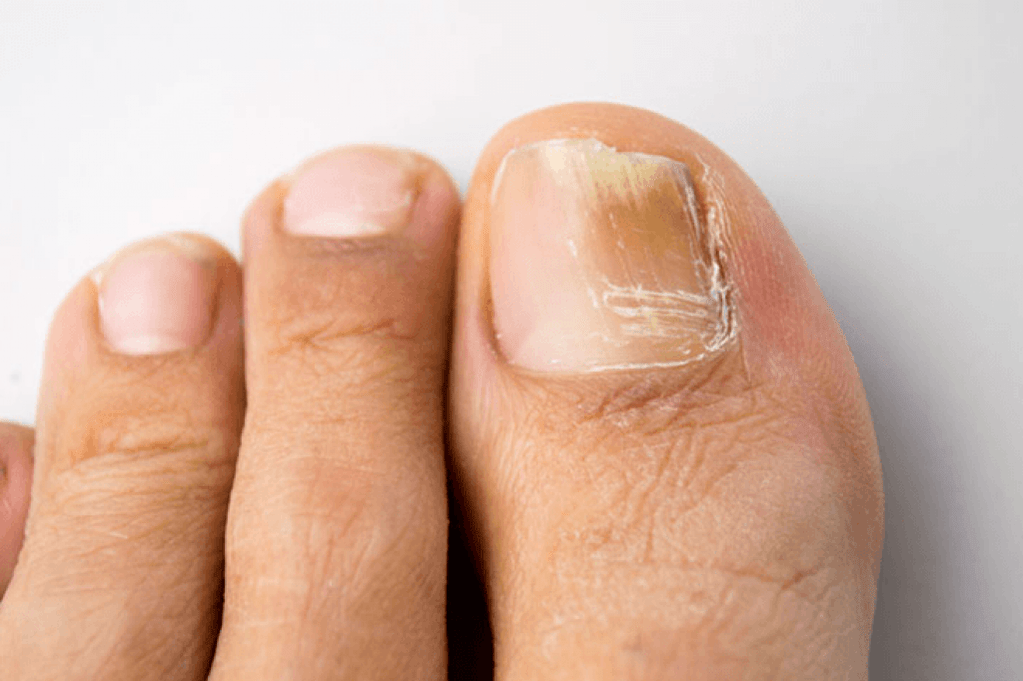
- white or yellowish spots on the nail, in the early stages they are often located in the upper corner of the nail, but this is not necessary.Localization depends on where the pathogenic microorganism is introduced;
- the nail surface changes, becomes thicker, loses smoothness and grooves appear on it;
- The nail has become very brittle, and the part that grows back will crumble and break.
Advice!The listed signs do not allow for a clear diagnosis.If you suspect you have a fungus, you need to get tested.This will not only determine the presence of the pathogen but also its type.
Stage
As already noted, the development of nail fungus on the thumb occurs gradually.The speed of development of the process depends on the type of fungus.Onychomycosis, caused by a yeast-like fungal infection, progresses the fastest.People often distinguish three stages:
- Initial.At this stage, the signs are weak;The main symptom is the appearance of spots or stripes on the nails of a color different from the main tone of the nail.
- Reasonable.At this stage, the entire sheet changes color and loses smoothness.At this stage, an unpleasant foot odor may appear.
- Launched.The damage begins to spread to other nails and the nail begins to deteriorate.At this time, bacterial infections are often related to nail fungus, causing inflammation and pus on the skin of the fingers.
How to treat?
Fungal infections are difficult to treat.Many patients self-medicate and do not achieve the desired results, but only make the disease worse.Therefore, it is better not to try to treat it yourself, but to consult a dermatologist.
After testing, the specialist will choose the drug that is most effective in fighting the pathogen.After all, there are many different types of fungus so there is no single treatment regimen.In addition, when prescribing a treatment regimen, the stage of development of the process must be taken into account.
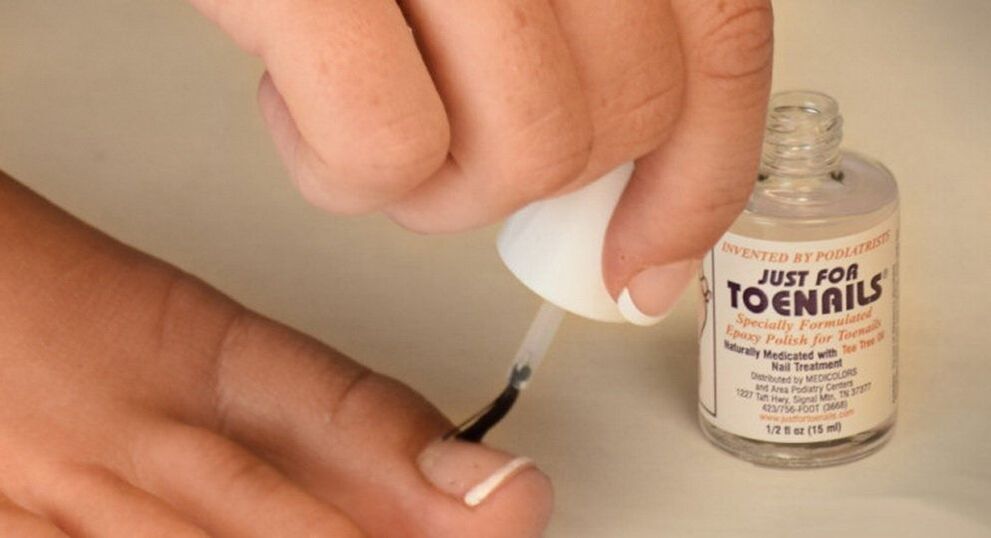
Treatment of nail fungus must be comprehensive.The specialist will prescribe products for external use, systemic drugs (tablets) that help treat infections from the inside, as well as products that support the immune system and promote general health of the body.
Lucky
This is a very easy-to-use treatment.The varnish is colorless and has added colorants.The last option will certainly be appreciated by women.
Coat the previously prepared plate with curing varnish.You need to wash your feet and take a hot bath to soften your nails.Then, remove the top layer from the diseased nail using a disposable nail file.
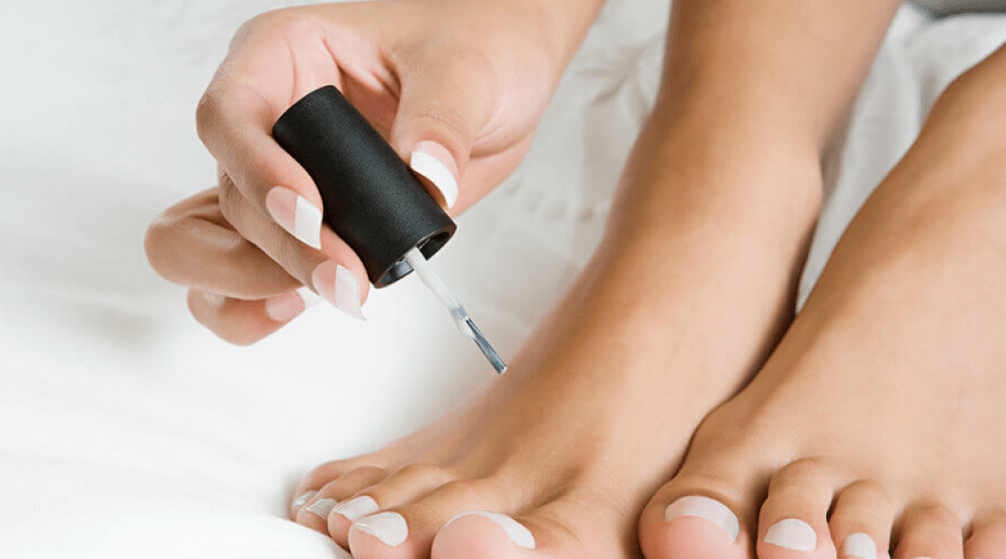
Varnish is applied not only to diseased nails, but also to healthy nails, this is done to prevent the spread of infection.The frequency of application depends on the type of preparation;Polish should be used until the nails are completely renewed.
Ointments and solutions
External treatment products are also produced in the form of ointments or solutions (sprays).Before applying the product, carry out the same preparation as before applying varnish.Treatment is carried out 1-2 times a day.
The doctor should prescribe an external treatment, since different drugs are active against different groups of pathogens.Here are some of the most commonly prescribed medications:
Tablet
In advanced stages, it is necessary to combine with external treatment to use oral medications.As a rule, they contain the same active ingredients as topical medications.
Taking antifungal medications puts stress on the liver so they should not be prescribed for long periods of time.To achieve results, pulse therapy is used.The medicine is used for a short time, repeated periodically until complete recovery.This approach allows you to reduce the load on the liver and achieve an effective effect on pathogenic microflora.
Therefore, only a dermatologist after examination can answer the question of how to cure toenail fungus.During the analysis, the type of pathogen is determined, as well as its sensitivity to various drugs.This approach allows you to choose the most effective treatment path.In addition, patients should not forget the necessary hygiene measures.It is necessary to regularly disinfect shoes, wash socks at high temperatures and iron them on the wrong side.